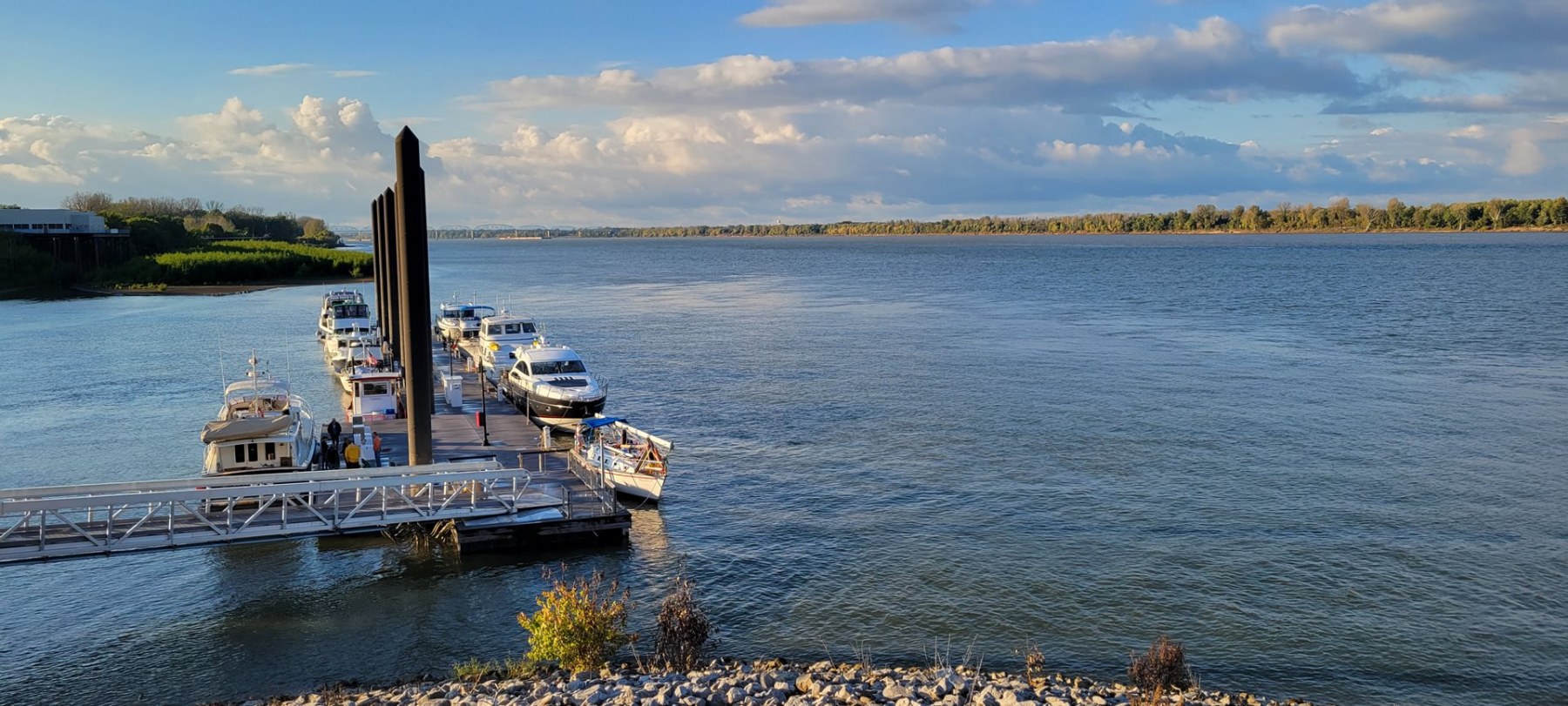
Another early start to the day as we leave this anchorage and head to Paducah, KY. Only 1.5 miles on The Miss and we take a swift left turn onto the Ohio River. The Ohio River current runs against us as it feeds the Mississippi heading south. We only have 60 miles in total on the Ohio River. Today we will run about half to Paducah where the city has built a dock complete with diesel, gas, pump out, water, power. The city is available to explore.
First we must get through the Olmstead Lock and Dam. In 2015 when we were through these parts it was under construction. It will be interesting to see the finished project.
The project consisted of two 110’ X 1200’ locks adjacent to the Illinois bank, and a dam comprised of five Tainter gates, 1400’ of boat operated wickets and a fixed weir. The proposed replacement structure will eliminate Ohio River Locks & Dams 52 & 53. Locks & Dams 52 & 53 were completed in 1929 and the temporary 1,200′ long lock chambers were added in 1969 at Locks & Dam 52 and 1979 at Locks & Dam 53. The antiquated design and age of these structures make it impossible to meet current traffic demands without significant delays. The existing structures have deteriorated structurally and are overstressed during normal operating conditions. Existing wicket dam has missing sections and wickets that will not raise making it very difficult to maintain pool during low water. The temporary locks at Locks & Dam 52 & 53 have significantly passed their 15-year design life. This strategic reach of the Ohio River provides a connection between the Mississippi River, Tennessee River and Cumberland River. More tonnage passes this point than any other place in America’s inland navigation system. In 2011, 91 million tons (Locks & Dam 52), traversed this portion of the Ohio River. 25% of all coal shipped on the inland waterways transits Locks & Dam 52, destined for many of the 50 power plants located on the Ohio River System or the 17 power plants located in eight states on the Upper or Lower Mississippi River.
As we pass into Kentucky we do notice a lot of coal plants on the shorelines. Barges are now carrying open loads of coal which we had not seen until now. We pass more tows and massive 30 piece barges being pushed along the current. There are dredging projects happening. Massive dredging machines line the channel. The Ohio River is a wide channel which makes it easy to pass. If it weren’t for the activity on the water there would be only shoreline as this area is again very unpopulated.
Paducah, originally known as Pekin, was settled around 1815. Settlers were attracted to the community due to its location at the confluence of the Ohio and Tennessee Rivers. The community was inhabited by a mix of Native Americans and Europeans who lived harmoniously, trading goods and services.
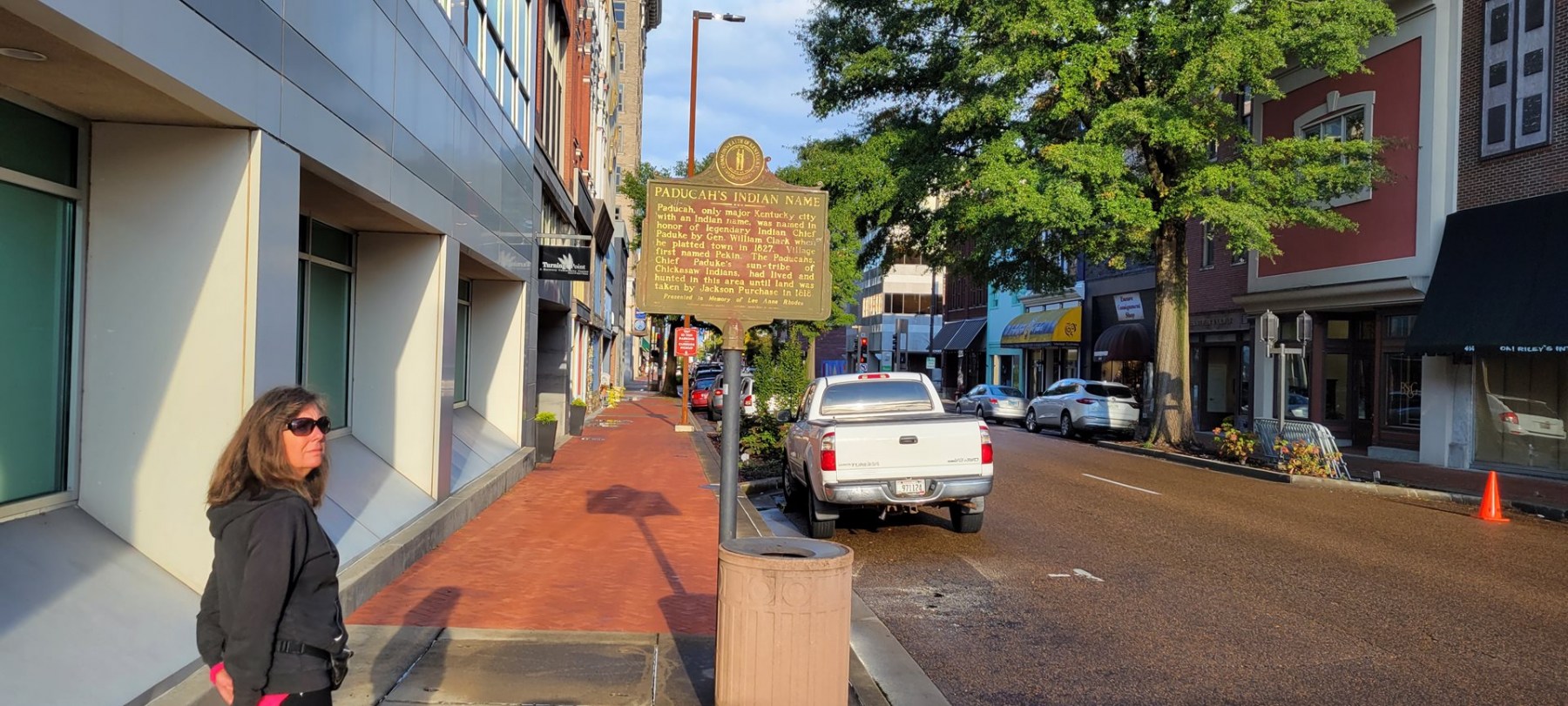
In 1827, William Clark, Superintendent of Indian Affairs for the Mississippi-Missouri region, arrived in Pekin with a title deed to the land he now owned, which was issued by the United States Supreme Court. Clark most likely took stock of the settlers that had arrived at some point before himself, and offered the land for purchase, so they could occupy it with title in their name. If they did not choose to purchase the right to occupy the land, they most likely relocated to another area. The town was platted out and named in honor of the largest nation of Native Americans that ever roamed North America, the Padouca Indians. Lewis and Clark had made acquaintance with many of them while on their trek west. A letter written by Clark to his son clearly states the reason for the naming of the town. (A facsimile of the letter and the original Paducah maps are on display at the Market House Museum in Paducah.) The community was incorporated in 1830.
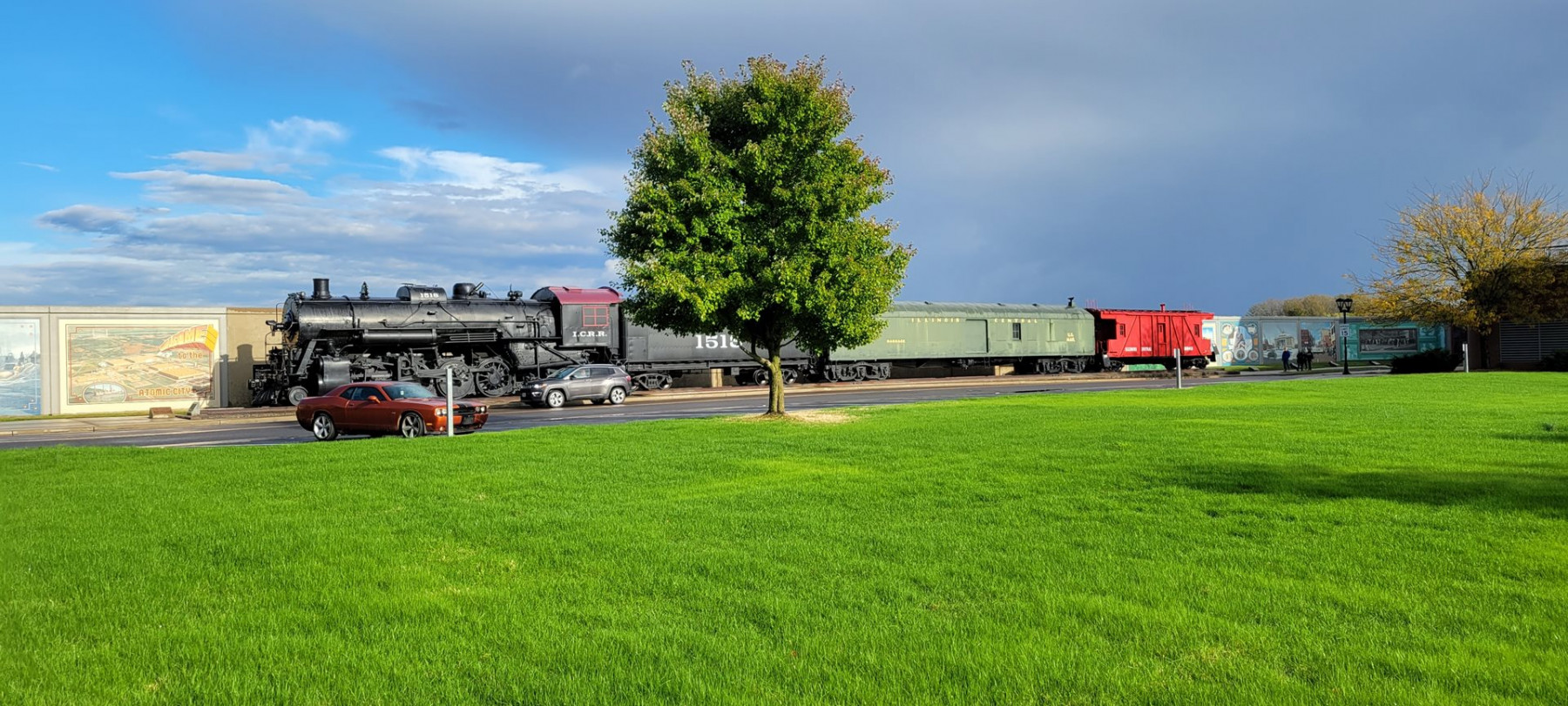
Paducah thrived due to its port facilities along the waterways that were used by steamboats. A factory that manufactured red bricks was established and a foundry for making rail and locomotive components was built, ultimately contributing to a river and rail industrial economy.
In 1856, Paducah was chartered as a city. The community continued to capitalize on its geographic location by becoming the site of dry dock facilities for steamboats and towboats and, in turn, headquarters for various bargeline companies. Paducah also became an important railway hub for the Illinois Central Railroad due to its proximity to the coal fields in Kentucky and Illinois.
In 1937, the Ohio River at Paducah rose over its 50-foot flood stage. The flood was considered to be the worst natural disaster in Paducah’s history. As a result of the flood, the United States Army Corps of Engineers built a flood wall to replace the earthen levee that had once been in place which now has artists works painted on the walls for you to view.
Other significant events in the community’s history include the selection of Paducah in 1948 for the development of a new Uranium Enrichment Plant, and the development of the Museum of the American Quilter’s Society in Paducah in 1991, which draws quilters from around the world.
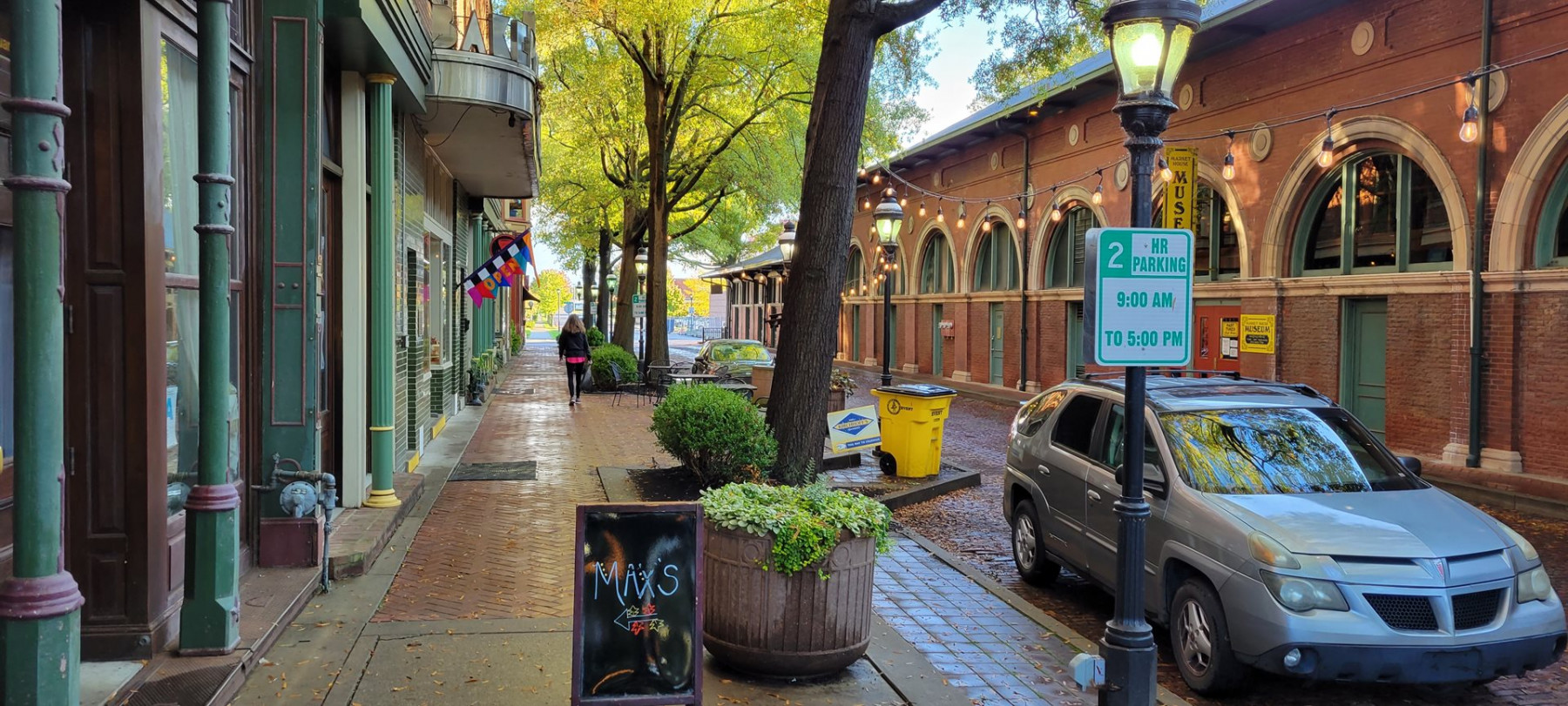
Paducah has several museums , such as the Paducah Railroad Museum, the River Discovery Museum, the Tilghman Civil War Museum, and the oldest, the William Clark Market House Museum, founded in 1968. Several festivals such as the American Quilter’s Society Quilt Show and Contest in April (AQS QuiltWeekTM), the LowerTown Arts & Music Festival in May, and BBQ on the River in September attract large crowds.
In 2017, the City of Paducah opened its 340-foot transient boat dock adjacent to a newly constructed park area that extends into the Ohio River. The park provides a harbour area for the transient dock and creates the potential for the development of a future marina.
The dock, located downstream from the heart of historic downtown Paducah, provides space for transient boaters to enjoy Paducah by spending a few hours or spending several nights. Amenities include fuel (diesel and marine grade gasoline), water, power pedestals, and a sewer pumpout station . We spend the next couple nights here along with 9 other boats.